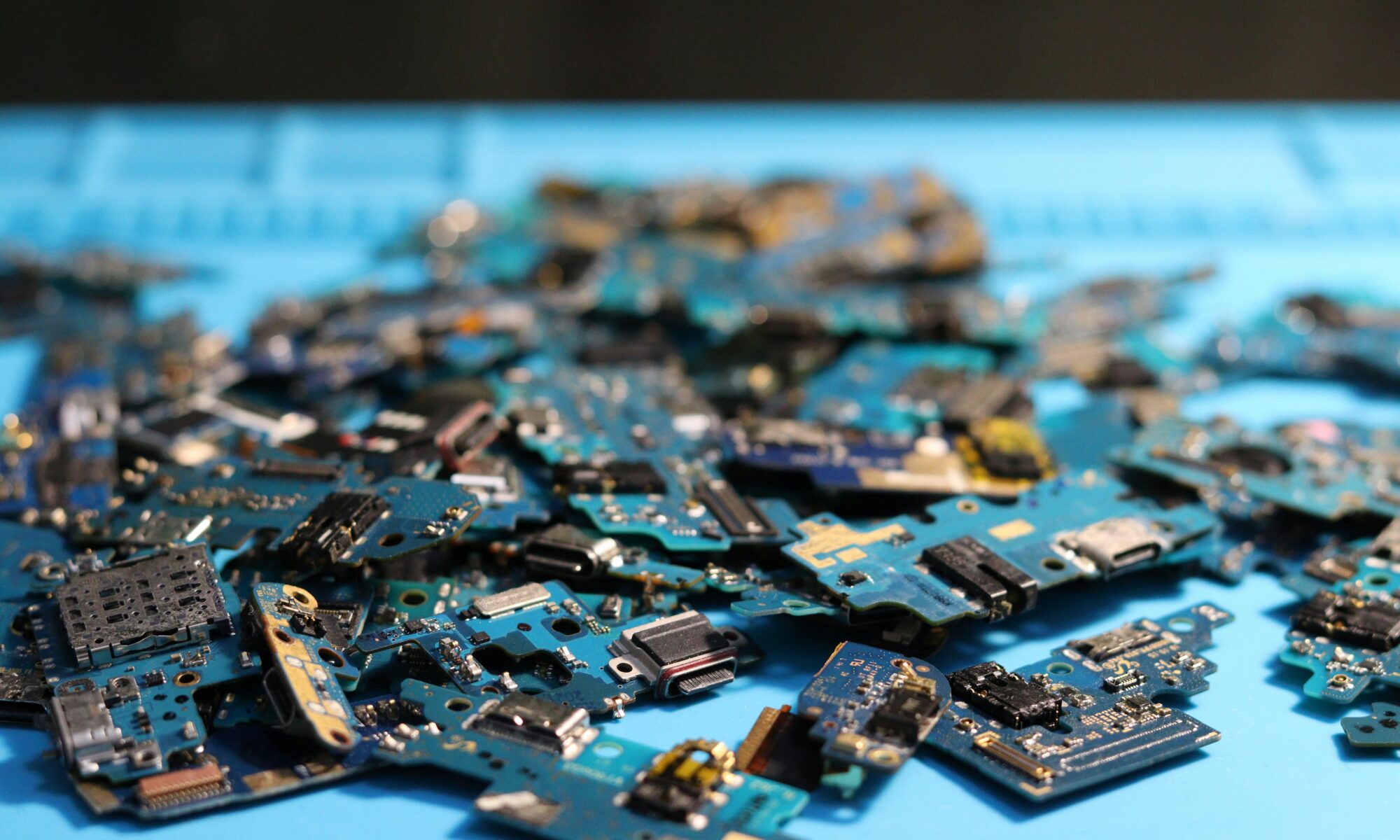
Every year, thousands of tons of electronic waste are generated in Mauritius. Too often, these discarded appliances end up in landfills or abandoned in the wild, releasing toxic substances into the environment. Hence recycling them is essential: it protects the ecosystems, preserves public health, and helps build a circular economy. For more than 21 years, BEM Recycling has been a pioneer in this field, guiding individuals and businesses in responsibly managing their end-of-life equipment.
Mauritius and the Rise of Electronic Waste
Electrical and electronic devices have become an inseparable part of daily life in Mauritius. From mobile phones and laptops to refrigerators, air conditioners, smart toys, and even electric bicycles, these tools shape the way we live, work, and interact. But what happens once they break down or become obsolete? Unfortunately, many still end up dumped in open-air landfills or carelessly discarded in the environment, where they release dangerous substances. Greenhouse gases, lithium batteries among others are all harmful components that can pollute soil, water sources, and even the air we breathe. This is not just a Mauritian problem: worldwide, the amount of electronic waste (also called WEEE – Waste Electrical and Electronic Equipment) is skyrocketing, driven by rising consumption and rapid technological obsolescence. Globally, millions of tons of such waste are produced each year, while less than a quarter is properly recycled. In this context, recycling is not simply an eco-friendly option — it is an urgent necessity. And this is exactly the mission taken on by BEM Recycling, a family-owned company and one of Mauritius’ pioneers in the field, which for more than two decades has been helping citizens, businesses, and institutions responsibly manage their electronic waste.
WEEE: Waste Unlike Any Other
Electronic waste is unlike any other form of waste. Unlike household garbage, which is usually easy to sort, compost, or recycle through conventional streams, electrical and electronic appliances combine a wide variety of complex materials. They contain plastics, ferrous and non-ferrous metals, special glass, rubber, printed circuit boards, miniaturized chips, and batteries that are both flammable and toxic. Their hazardous nature stems from this very complexity. For example a poorly handled battery can ignite spontaneously or contaminate the soil; and some components release dangerous chemicals when abandoned outdoors. That is why WEEE is strictly regulated internationally (Basel Convention,..) and locally in Mauritius ( ‘’Environmental Act’’). But beyond legal obligations, managing this waste properly is a pressing environmental and public health issue. Recycling WEEE requires specialized infrastructure, advanced know-how, and rigorous procedures at every stage. By entrusting their used devices to BEM Recycling, Mauritians ensure not only compliance with international standards but also secure data erasure, guaranteeing that sensitive information stored on old devices does not fall into the wrong hands. In short, these are not ordinary discarded objects: they are hazardous waste that requires expert handling.
BEM Recycling: Two Decades of Expertise Serving the Island
For more than 21 years, BEM Recycling has established itself as the go-to specialist in electronic waste management in Mauritius. Certified Made in Moris since 2022, the company operates a modern treatment center in La Chaumière, where it handles all types of equipment. From small electronics such as phones, computers, and printers to large household appliances like refrigerators and washing machines, as well as industrial or office equipment, BEM offers comprehensive solutions. What makes BEM stand out is its three-stage process. The first step is depollution, where hazardous substances are safely neutralized. The second step is dismantling, which allows the careful separation of plastics, metals, glass, and rubber. The third step is valorization, where these sorted materials are given a second life by being sold to local or international manufacturers who reuse them in the production of new goods. This model fully embodies the principles of a circular economy, where waste is not the end of a cycle but the beginning of a new one. Through continuous investment, unique expertise, and strong partnerships, BEM is transforming the way Mauritius approaches e-waste. Every item entrusted to the company is not simply disposed of — it is turned into a resource that reduces pollution, creates economic value, and conserves natural resources.
Recycling: An Investment in Tomorrow
Recycling electronic waste comes at a cost. Many individuals and companies wonder why the service is not free. The answer is straightforward: collection, depollution, dismantling, and valorization all require specialized equipment, skilled workers, and significant logistical resources. This is why recycling and transport fees apply, depending on the type and volume of waste. However, BEM provides affordable alternatives, such as direct drop-off at La Chaumière, where no transport fee is charged. This contribution should not be seen as an unnecessary expense but as an ‘’eco-contribution‘’— a collective investment in the future. In Europe, this principle is already widely applied through the Extended Producer Responsibility (EPR). When a consumer buys a new appliance, a small fee is added to the purchase price to cover its eventual recycling. This system, which could one day be implemented in Mauritius, ensures that the cost of waste treatment is anticipated and shared in advance. Until then, it is essential that citizens contribute to a recycling tax. After all, the long-term cost of pollution is much higher. By investing today in recycling, we prevent contamination, safeguard our resources, and support an ecological transition. In this sense, the cost of recycling is not a burden — it is a form of insurance for tomorrow.
A Growing Awareness in Mauritius
While much progress remains to be made, awareness is steadily growing among Mauritians. Back in 2017, only a handful of individuals used BEM Recycling’s services. By 2024, the number had already surpassed a hundred households, and collection campaigns organized with partners like Emtel and Mission Verte now divert several tons of WEEE from landfills each year. The Emtel Roadshows, held in shopping malls such as Phoenix or Mahogany, make it easy for citizens to drop off small devices free of charge, significantly reducing illegal dumping. These initiatives are strengthened by educational campaigns in schools, workplaces, and public spaces, where the risks of electronic waste and the benefits of recycling are explained in accessible, practical terms. Social media also plays a decisive role: with more than 15,000 followers on its platforms in 2025, BEM has successfully built a community committed to recycling. This progress highlights a slow but steady shift in public habits. The challenge now is to turn this awareness into a collective reflex: making recycling not an exceptional act but a normal part of everyday life for Mauritians.
How Every Citizen Can Take Action
The good news is that recycling old appliances is far easier than many people believe. Contrary to the common idea that one must wait for a collection campaign, anyone can act right away. Households and businesses simply need to contact BEM Recycling via phone (218 19 20) or social media to request a personalized quote. Depending on the volume and type of equipment, the company can organize home collection (with transport fees) or advise direct drop-off at the La Chaumière center, the most economical solution. In addition, partner outlets such as The Good Shopand The Charity Centre serve as drop-off points for smaller items. Every action counts: a discarded phone contains rare metals that can be reused; a broken printer still provides plastics and circuits that can be repurposed into secondary raw materials; a refrigerator, when properly depolluted, avoids the release of harmful gases. By choosing to recycle, citizens not only protect their immediate environment but also support the creation of a local circular economy, where waste becomes a resource. More than just a service, recycling is an act of solidarity toward the island and its future generations.
Recycling as a Civic and Collective Duty
Recycling electronic waste is not an isolated act. It is a shared civic duty, involving both citizens and professional recyclers. On an island like Mauritius, where land is scarce and ecosystems are exceptionally fragile, every properly recycled appliance is a small but meaningful victory for sustainability. Consumers must understand that the financial contribution to recycling is not a useless fee, but a vital investment in protecting their living environment. Meanwhile, specialized companies such as BEM Recycling provide guarantees: treatment in line with international standards, full transparency, and the transformation of waste into usable resources. This combination of individual responsibility and professional expertise forms the foundation of a successful ecological transition.
Over two decades of experience have enabled BEM to become a trusted partner, guiding Mauritian society through this necessary transformation. The message is clear: to recycle is to protect, to anticipate, and to build the future.And that future begins today, with a simple gesture: entrusting your old electrical appliances to expert hands so they can be given a second life. In doing so, every citizen helps create a cleaner, safer island, one that truly embraces the promise of a circular economy.